
📝 Are You Writing Things Down?

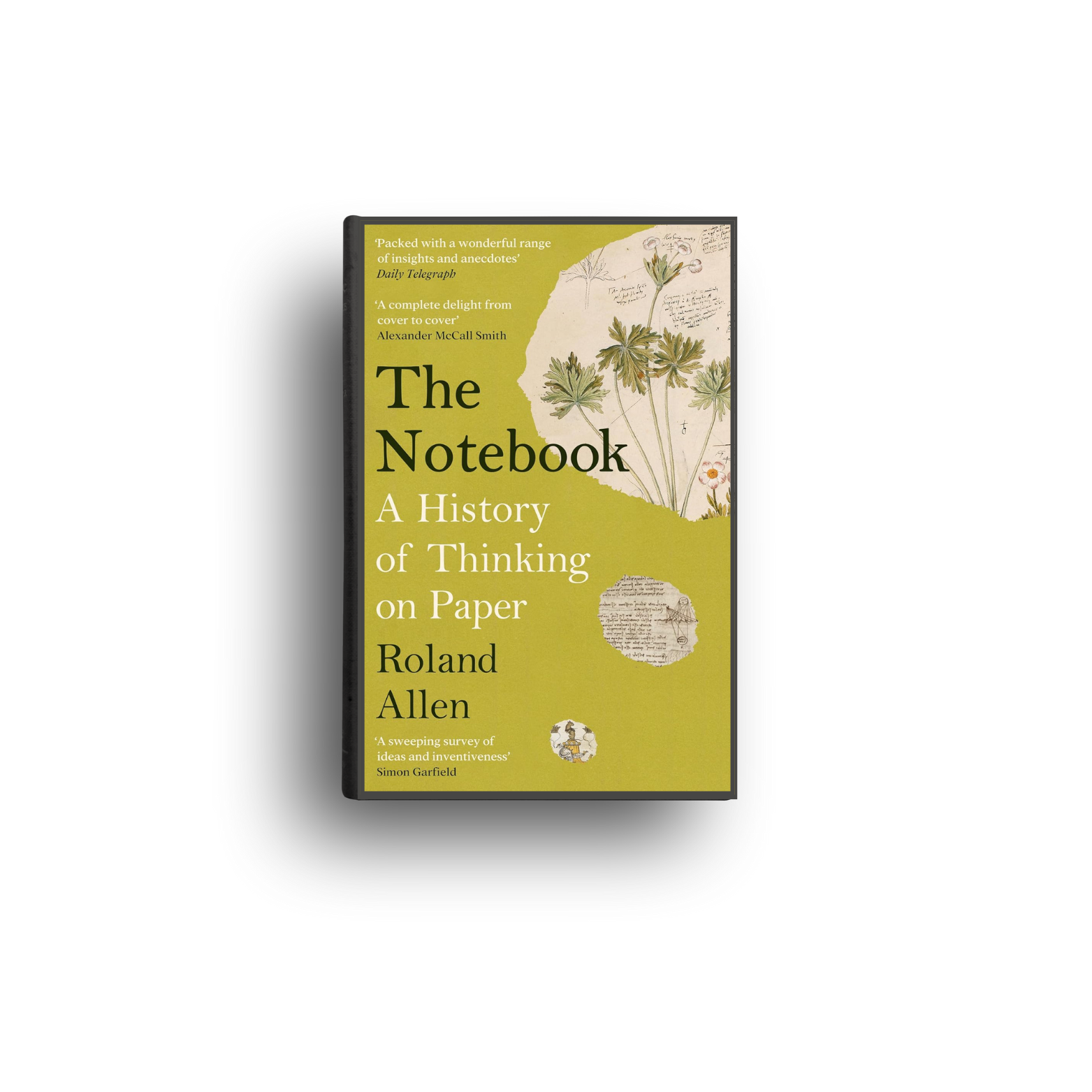
What's the most underrated invention in human history?
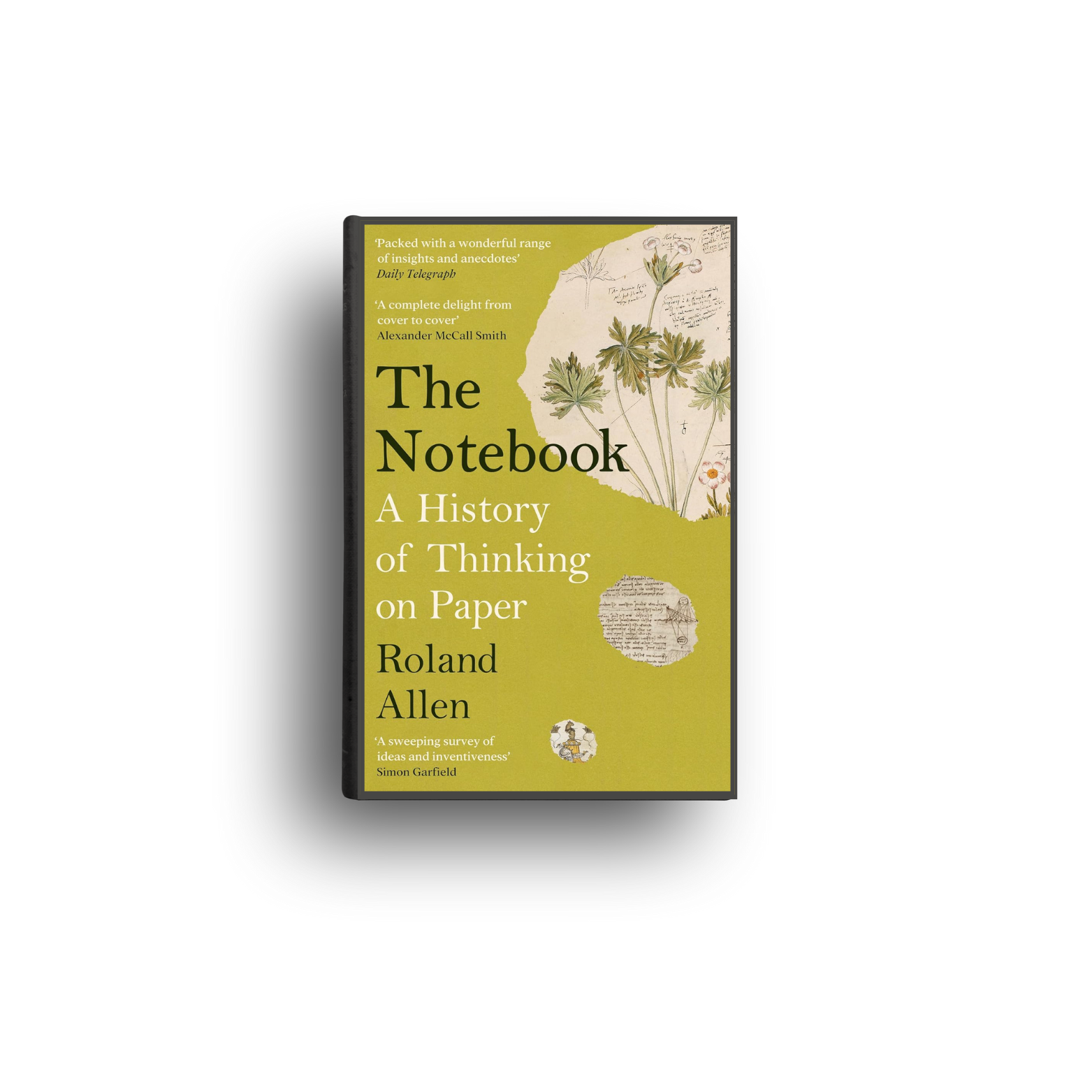
Roland Allen thinks it's the humble notebook.
In The Notebook: A History of Thinking on Paper, he explains how for much of recent human history, the humble notebook (in various forms) has been the key enabler for some of the greatest ideas, models, inventions and creative works ever made.
From Da Vinci to Darwin, most of their key contributions to mankind stemmed from the act of writing things down in a particular way.
And their app of choice was the notebook of their time.
So Roland Allen hasn't written a biography of these inventors, artists or scientists.
He's written a biography of the tool they used to think: their notebook.
But don't we write things down to remember, after we have understood them?
And is writing about capturing and remembering thoughts, or creating them?
The short answer is:
We think most deeply while we write, not before or after we write.
That doesn't seem intuitive. And how does that even happen?
To understand this, let's understand what writing really is (and how it's inseparable from thinking):
My Key Learnings From The Book:
1.Thinking hasn't just been mental. It’s been mechanical.
Over human history, the notebook has not just been a mirror of thought. It's been a machine for thinking.
- Over centuries, the notebook didn’t just record thought - it shaped it.
- From Da Vinci’s mirror-writing to Darwin’s margins, notebooks were the original thinking toolkits, and the original productivity apps.
2.Paper democratised philosophy.
To pick up a pen or pencil was not just to document a decision, but to enter a conversation with one’s own uncertainty.
- Once paper became cheap, the idea-capturing methods once confined to wealthy orators, scribes and royalty became portable, editable and personal.
- The notebook gave rise to private clarity before public distribution.
3.Rough work has always been more important than finished drafts.
The mind, if unassisted by the hand, forgets that it doesn’t know what it thinks it does.
- Notebooks were where bad ideas went, and still go, to mature.
- The mess has always been the method. The scribble has always been the signal.
4.Before productivity apps, there was silence and pause.
The notebook made room for mistakes, and in doing so, created the conditions for insight.
- Newton didn’t need Notion or a Notes app. He needed stillness and blank pages.
- Writing to think > writing to remember.
5.Notebooks have also been time machines.
What thinkers wrote down in notebooks became a true lens into who they were.
- In notebooks, your writings reveal not just what you thought at a point in time - but how you learned to think over time.
Why Your Writing Habit May Go Extinct
And What To Do About It
Today, AI can write. And apps can autocomplete.
Everything you say can be transcribed, reworded, or reformatted in a second.
The result? Your writing muscle is quietly atrophying.
But those who keep writing things down?
They’ll be the ones who still think clearly in a world that only reacts verbally with the limited information in their working memory.
Writing is thinking. If you lose the ability to write clearly, you lose the ability to think clearly - especially when it matters most.
How to Ensure You Don’t Forget How to Write:
1.Write Before You Explain
Before every meeting, conversation, or pitch - write your thoughts in 3-5 bullets.
It slows you down. But it sharpens you up.
2.Rewrite Something You Read
Take a quote, insight, or article and rewrite it in your own words.
It’s not plagiarism. It’s perspective-building.
3.Keep a Notebook (Not Just A Journal)
Writing for yourself is not just about feelings.
It's about fog-clearing.
You can easily use a notebook to:
- Map ideas
- Draft arguments
- Sketch mental models
4.Force Constraints
For example, write a 5-line summary of a 20-minute podcast.
Or write a tweet-length review of a book.
Why? Because clarity (and thinking in general) loves constraints.
5.Don’t Just Take Notes. Make Notes.
When you read something meaningful, don’t just highlight it.
- Write a response.
- Note a quick agreement or disagreement.
- Summarise the idea in your own language.
Notemaking > notetaking. The first actually makes meaning. The second just records it.
6.Build a Thinking + Writing System
You can simply use:
- Some Paper for brainstorming
- A simple note-taking app for digitisation and collaboration
And most importantly, your mind for meaning-making.
7. Publish. Even if Privately.
Write whatever you want. But publish it.
But don't write for others' likes.
Write for your own clarity.
The Risks of Losing the Writing Habit
What You Lose When You Stop Writing - and Why It’s Costlier Than You Think
You’re probably already writing less. Why?
- AI can now finish your sentences.
- Notes apps can automate your highlights.
- Voice notes can replace written thoughts.
- And your thumbs can type faster on the phone than your brain can even think.
And that’s the real danger.
What Happens When You Stop Writing
1.You Stop Clarifying
Remember, writing is not record-keeping. It’s record-making.
Without it, your thoughts will stay vague.
And eventually, you'll start reacting to information, not reflecting on it.
No one ever thinks clearly without trying to write clearly.
2.You Just Stop Remembering
Memory doesn’t come from reading.
It comes from rewriting what you read in your own words.
Writing makes ideas stick. Other methods usually let them slip.
3.You Lose the Ability to Argue
Want to win a debate? Start by winning one with yourself.
Writing is where your ideas face rigorous interrogation from yourself.
Skipping the step of writing means no true debates are possible with yourself. The result? Weak or no logic in your arguments.
4.You Stop Asking Better Questions
Writing forces you to slow down, back up, and go deeper.
Without it, you stay on the surface of a thought.
Without writing, your curiosity is satisified by content consumption instead of conceptual clarification.
5.Your Thinking Becomes Dependent On The Writing Of Others
Your thoughts become dependent on prompts. On AI. On chatbots. On algorithms. And most importantly, the independent thoughts of others.
You forget how to wrestle with ideas and arrive at independent conclusions alone.
A mind that forgets how to write eventually forgets how to think independently.
Why I Get My Students to Write Before They Type (And Write Before They Speak)
Because Thinking Without Writing Is Just Noise With Confidence
Everyone wants to speak well.
Everyone wants to present with confidence.
Everyone wants to type faster, respond quicker, and post smarter captions.
But here’s a fact that's missed by most:
If you can’t write it clearly, you don’t understand it deeply.
And if you don’t understand it deeply, you’re just performing, not processing.
Why I Make Students Write First
1. Writing is Thinking With Proof
Speaking without writing skips the act of preparation. Writing is accountable.
You can hear yourself speak and still lie to yourself.
But the page doesn’t miss. It reflects your thoughts and mistakes exactly, with precision.
2.Typing Is More Polished. But Writing Is More Honest.
Typing encourages speed. Structure. Editing as you go.
Writing by hand is raw. You can’t scroll back.
That’s where the real, uninterrupted flow of thinking (and mistakes) shows up.
3.You Learn What You Believe by Reading What You Wrote
Many students discover their strongest opinions only after wrestling with a sentence.
They don’t need a prompt. They need a pause and some paper.
4.Writing Before Speaking Forces Clarity
Most group discussions are loud, fast, and shallow.
But when students write first, they filter their ideas through their brain-fog. They arrive at a sentence with more thought, not noise.
When you speak before you write, you perform.
When you write before you speak, you learn to persuade yourself first, then get to persuading others.
Who Should Read This Book?
Samridh’s Library recommends this book for:
1. Students
Because copying notes ≠ learning.
You’ll learn how writing helps you ask better questions, not just remember textbook answers.
This book teaches you why, over history, it's been important for every successful thinker to think like a learner - not just study like a student.
2. Professionals & Consultants
You send emails. You write slides. But can you sit alone and write down what you actually believe?
If you think and write clearly, your opportunities compound. If you don’t, they eventually shrink. This book explains why it's happened to others.
3. Entrepreneurs & Creators
Your job is not to react without thought.
It’s to clarify your ideas and vision.
Notebooks are where ideas stop sounding good and start getting real.
Most successful pitch decks should start as a page of raw thoughts to yourself. In a way, this book explains why success starts with writing down and negotiating with failure.
4. Educators & Thinkers
If you teach, guide, or mentor - this book is a quiet manifesto.
It explains why writing things down is how humans preserve, question, and sharpen thoughts over history.
5. Anyone Addicted to Speed
If you’ve replaced thinking with typing, or reflection with reacting - this book is your pause button. It reminds you:
You don’t need a new app. You just need a blank page and silence.
Final Thought:
A notebook (and losing the habit of writing things down) is not about paper.
It’s about what we lose when we stop struggling with our own minds - on the page.
Writing is a slow habit in a fast world.
That’s exactly why it matters.
If you’re too busy to write, you’re too distracted to think.
Listen to The Samridh's Library Podcast
Want to be notified when new ideas are released? Follow The Samridh's Library Podcast on ᯤ Spotify or Apple Podcasts to be notified automatically when a new episode is up.